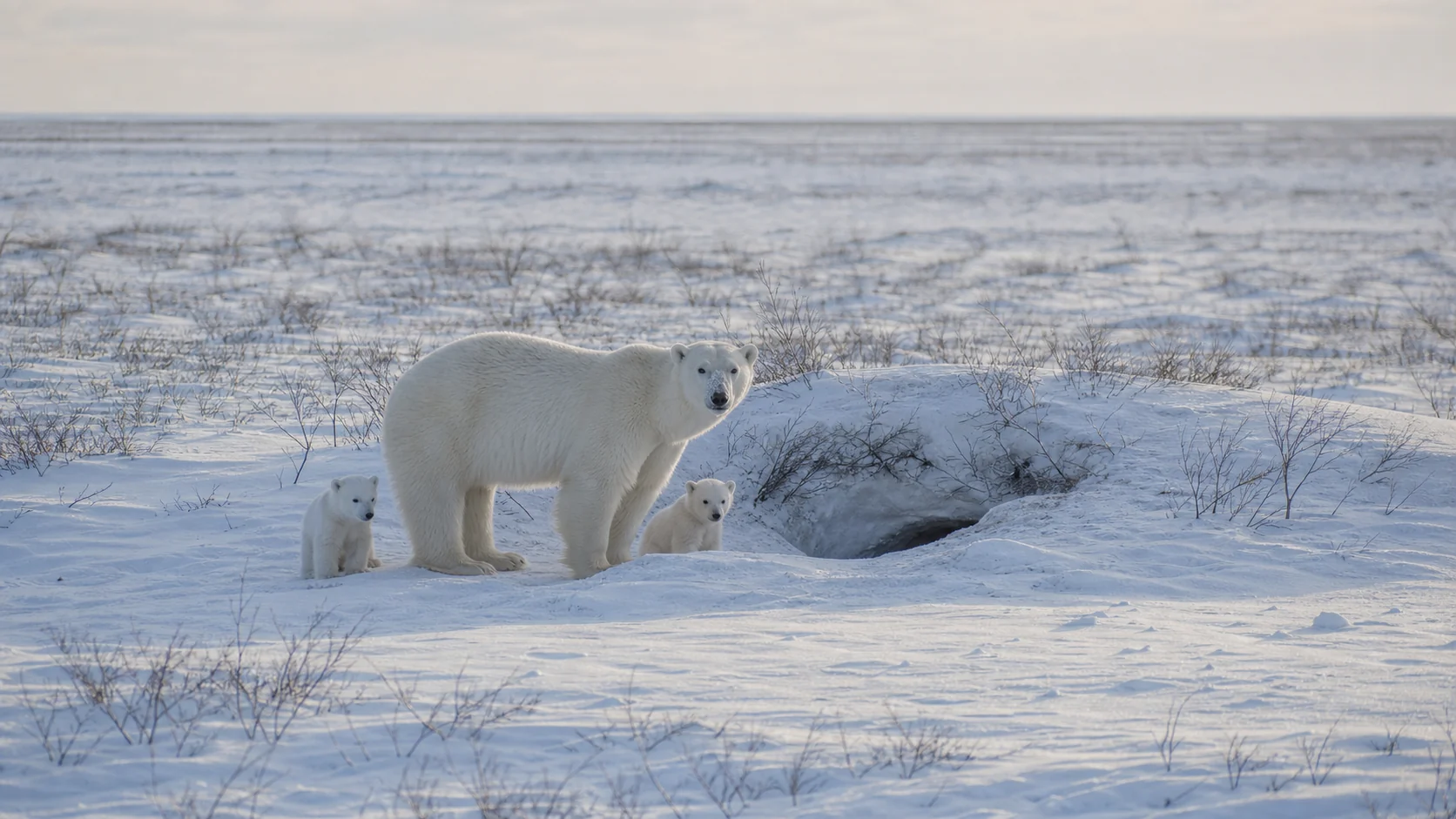
Expedition Report

Edge Of The Ice

Brief

Twenty-six days aboard a Svalbard expedition vessel, tracking polar bears across the ice edge as the Arctic summer fought to hold the cold in place.
June–July 2023
Expedition Date
Svalbard Archipelago, Norway
Location
78°N
Latitude Reached
3 person
Team
26 days
Duration
MS Antigua
Vessel
≈1,900 nM
Range covered

Expedition Summary

The marginal ice zone north of Svalbard is where the story happens every summer — where bears hunt, seals surface, and the boundary between frozen and open ocean shifts day by day. This expedition documented polar bear hunting behavior at the ice edge during peak sea ice retreat, focusing on the behavioral adaptations bears are developing as summer ice coverage continues to decline decade over decade. Twenty-six days. One vessel. Ice conditions that changed every 48 hours.
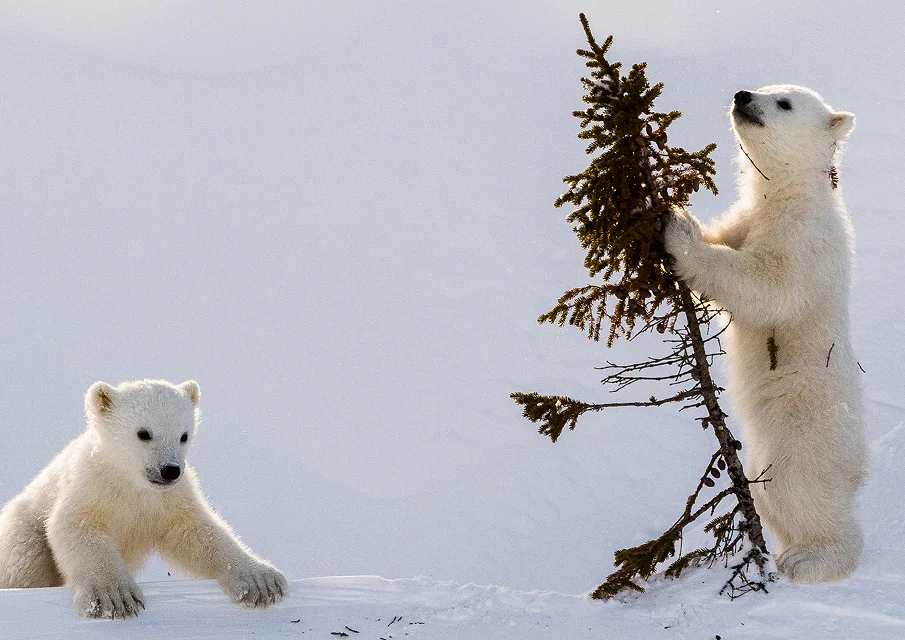
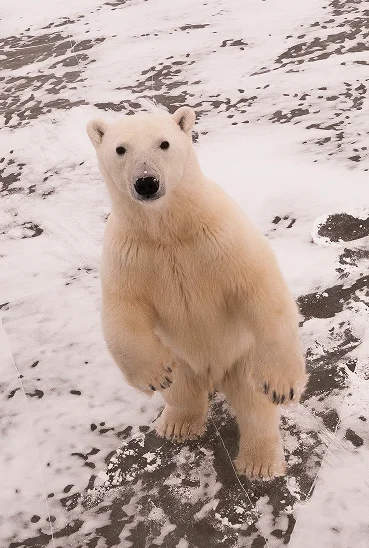
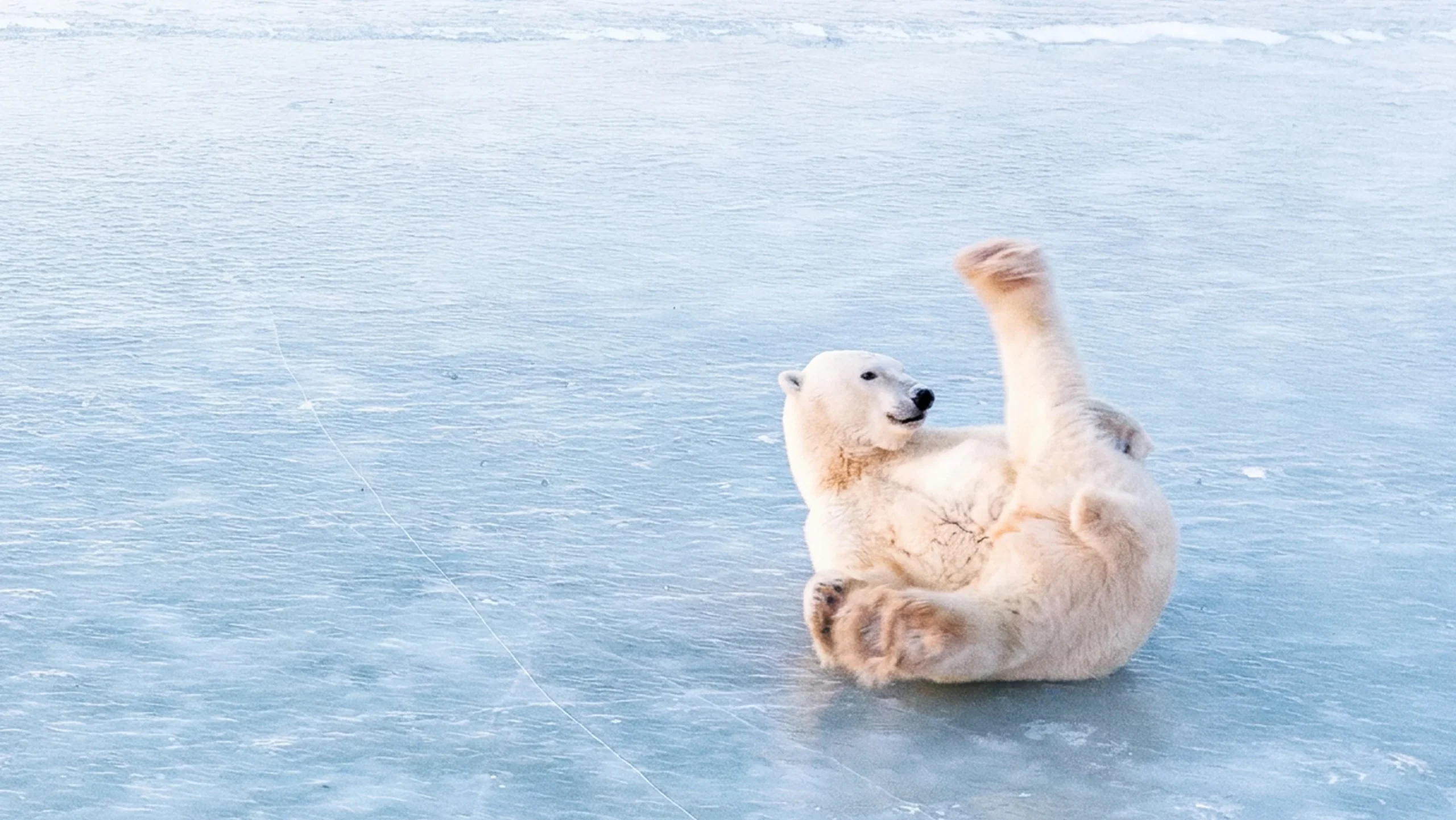
A cub presses its nose to its mother's face during a rest interval outside the den. Churchill, Manitoba. February 2024.

Mission Objectives

  1. Document ice-edge hunting behavior
    Capture bears actively hunting ringed seals at the marginal ice zone, with behavioral context not achievable from shore.
  2. Record body condition indicators
    Systematic photography of individual bears for condition scoring — fat reserves, coat quality, movement efficiency.
  3. Map aggregation zones
    Identify where bears were concentrating relative to ice edge position, sea surface temperature, and seal distribution.

Journey Timeline

Twenty-six days doesn't move in a straight line. The ice decides the route, the weather decides the pace, and the bears decide everything else. This is how it actually went.
Week

Entry and the First Bear

Departed Longyearbyen in fog. First ice encountered at approximately 80°N — thin, fractured pancake ice pushed south by wind. First bear sighted on day 3: a large male moving south along an ice tongue, unhurried. Shot at distance. Set the standard for what the next three weeks would feel like.

Week

The Productive Zone

The vessel followed the marginal ice zone east. Ice conditions consolidated — larger floes, more structure, more bears. Three successful hunts observed and documented. A mother with a single large cub appeared twice, 40 nautical miles apart — likely the same animal. This became the expedition’s central subject.

Week

Storm Hold and Drift Ice

A four-day storm system pinned the vessel in a protected fjord on the northeast coast. Ice conditions beyond the fjord entrance became unnavigable. Time used for equipment maintenance, review, and a single kayak excursion into the fjord to document a resting bear at water level — the most intimate images of the trip.

Week

Northwest Passage and Exit

Final push west along the northern coast. Ice had retreated significantly in three weeks — the change was visible and measurable. Last bear sighted on day 24: a thin sub-adult moving across open water between ice fragments. Made it back to Longyearbyen with 31,000 frames and one broken focus motor.

Week

Entry and the First Bear

Departed Longyearbyen in fog. First ice encountered at approximately 80°N — thin, fractured pancake ice pushed south by wind. First bear sighted on day 3: a large male moving south along an ice tongue, unhurried. Shot at distance. Set the standard for what the next three weeks would feel like.

Week

The Productive Zone

The vessel followed the marginal ice zone east. Ice conditions consolidated — larger floes, more structure, more bears. Three successful hunts observed and documented. A mother with a single large cub appeared twice, 40 nautical miles apart — likely the same animal. This became the expedition’s central subject.

Week

Storm Hold and Drift Ice

A four-day storm system pinned the vessel in a protected fjord on the northeast coast. Ice conditions beyond the fjord entrance became unnavigable. Time used for equipment maintenance, review, and a single kayak excursion into the fjord to document a resting bear at water level — the most intimate images of the trip.

Week

Northwest Passage and Exit

Final push west along the northern coast. Ice had retreated significantly in three weeks — the change was visible and measurable. Last bear sighted on day 24: a thin sub-adult moving across open water between ice fragments. Made it back to Longyearbyen with 31,000 frames and one broken focus motor.

Challenges & Discoveries

No expedition goes to plan. The plan is just a way of making sure you have the right gear in the wrong place at the right time. What actually happens is something you write about afterward, once you’ve figured out which parts were problems and which parts were the expedition.
Svalbard in summer gives you long light and short windows. The ice edge is a moving target — literally. Every morning the picture changes and you either adapt the day or lose it. These are the two challenges that defined the trip, and the three things we found that we weren’t entirely looking for.

  • Challenge — Ice edge position changed faster than anticipated
    The concentration zone shifted up to 40 nautical miles overnight on three occasions. Route planning had to be rebuilt daily around satellite ice data rather than the planned survey grid.
  • Challenge — Shooting from a moving vessel
    Even with gyrostabilized support, a vessel at sea introduces constant micro-movement. 500mm at 1/2000s became the baseline shutter floor — anything slower showed motion in full-resolution review.
Photographer's Note

Twenty-six days is long enough to stop thinking about photography and start thinking about the place. That’s when the real images happen — not when you’re hunting light, but when you’ve stopped hunting anything and the bear just exists in front of you and you happen to have a camera.
The ice edge is shrinking. Every expedition I’ve done in the last four years has shown me that in concrete, measurable ways — not as a projection but as a present-tense fact. I don’t know what the right response to that is. I keep going back and making the record as complete as I can.
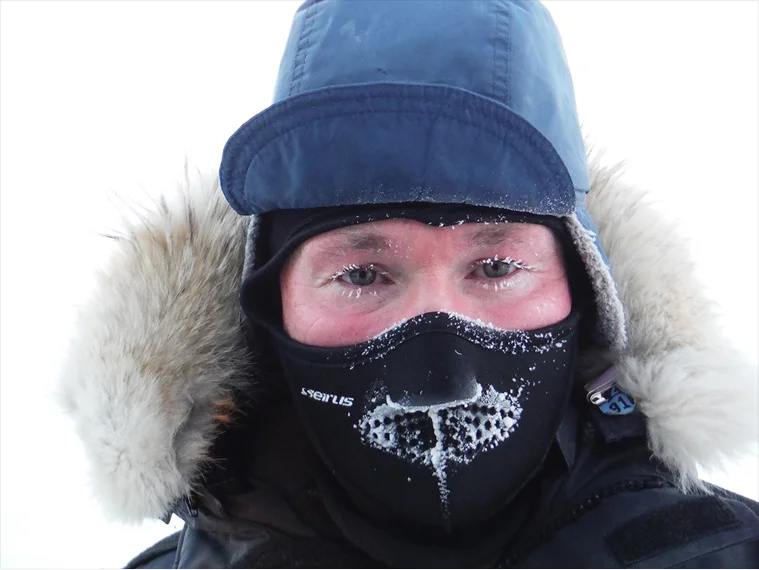
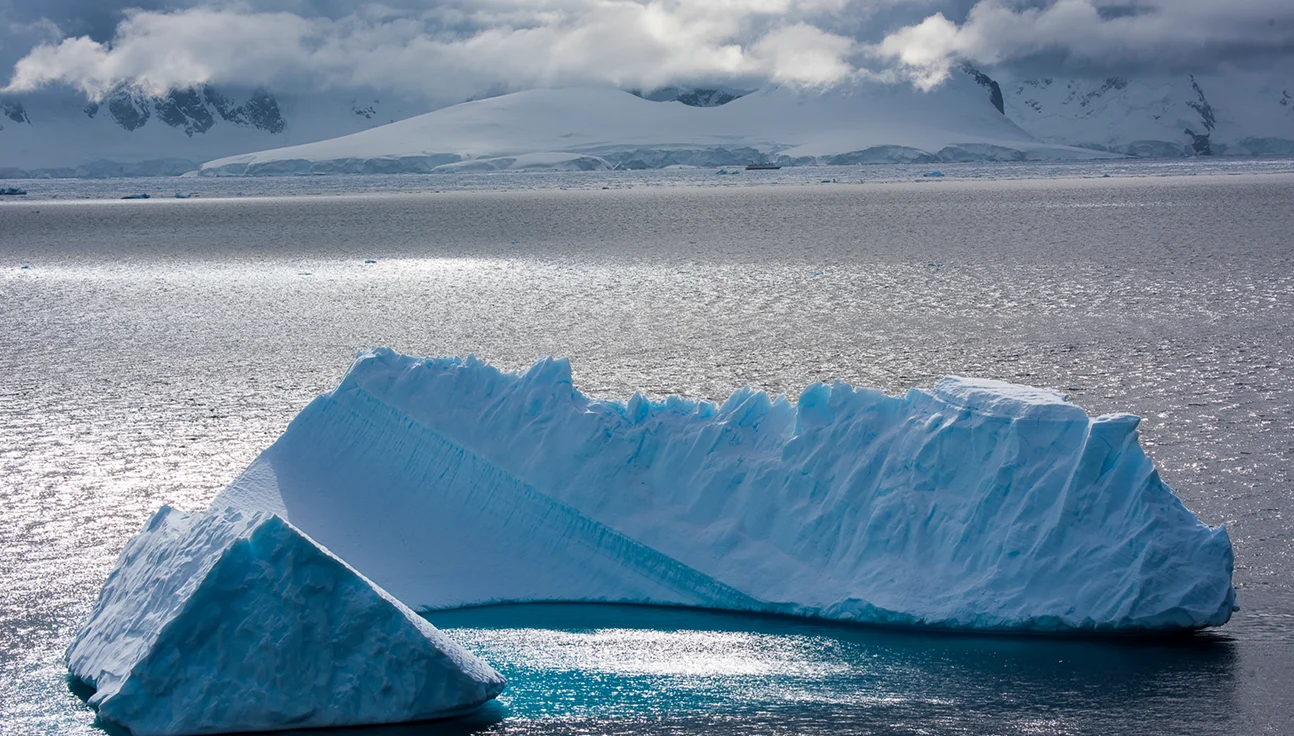
Ice on the lashes, snow on the mask, and miles of winter ahead. The conditions are part of the story on every polar expedition.

Gear Used

Cold changes every decision you make about gear. What works at −10°C fails at −35°C, and Wapusk in February doesn’t negotiate. This is what made it to the field — and what earned its place there.

Nikon Z9 + 500mm f/5.6 PF
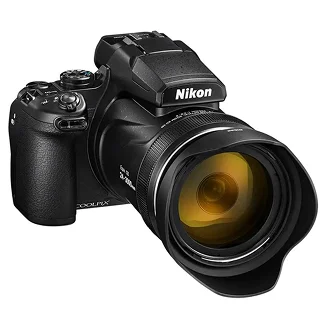
Primary — long reach without disturbing behavior

Gitzo Systematic tripod + Wimberley head
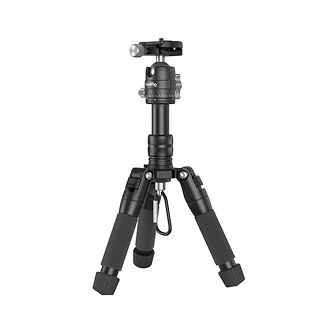
Nice Tripod Stand to use for shooting

Camera Settings Used

Capture the Arctic exactly as it appeared in the field. These are the camera settings used for the featured polar bear image during our expedition in the High Arctic.

1/1600 sec
Shutter Speed
f/5.6
Aperture
ISO 800
ISO
400mm
Focal Length
"The best polar bear photograph is the one where you forget the camera existed."
— Tom Kokta
Further Reading

Keep Reading

Wapusk National Park, Manitoba

Den Emergence

The rarest polar bear field experience: maternity-den emergence in Wapusk, where access is limited, weather is severe, and every frame
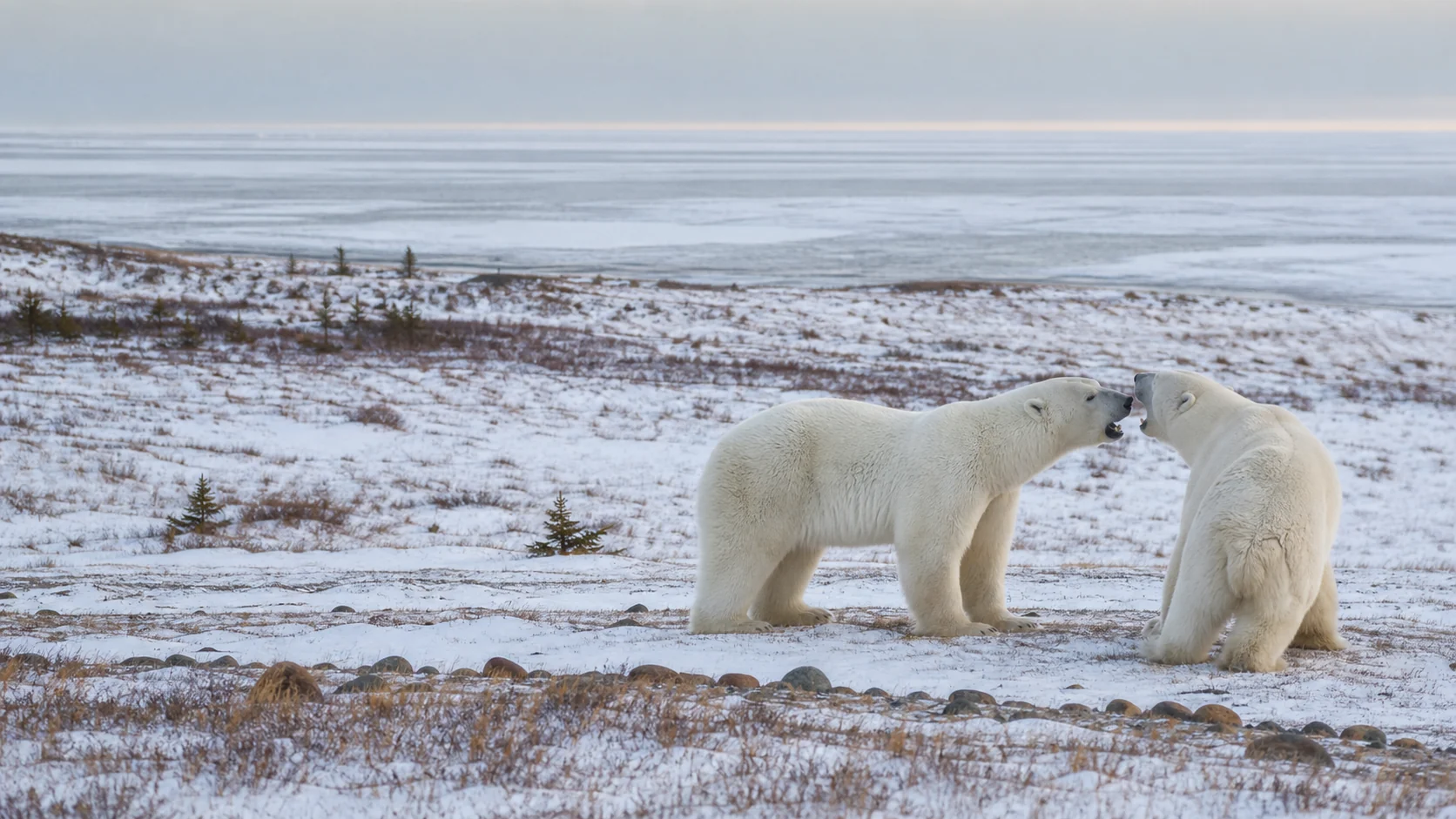
View Expedition Details
Churchill, Manitoba, Canada

The Great Wait

The most accessible polar bear expedition on Earth: Churchill in the freeze-up season, when bears gather along Hudson Bay and
View Expedition Details
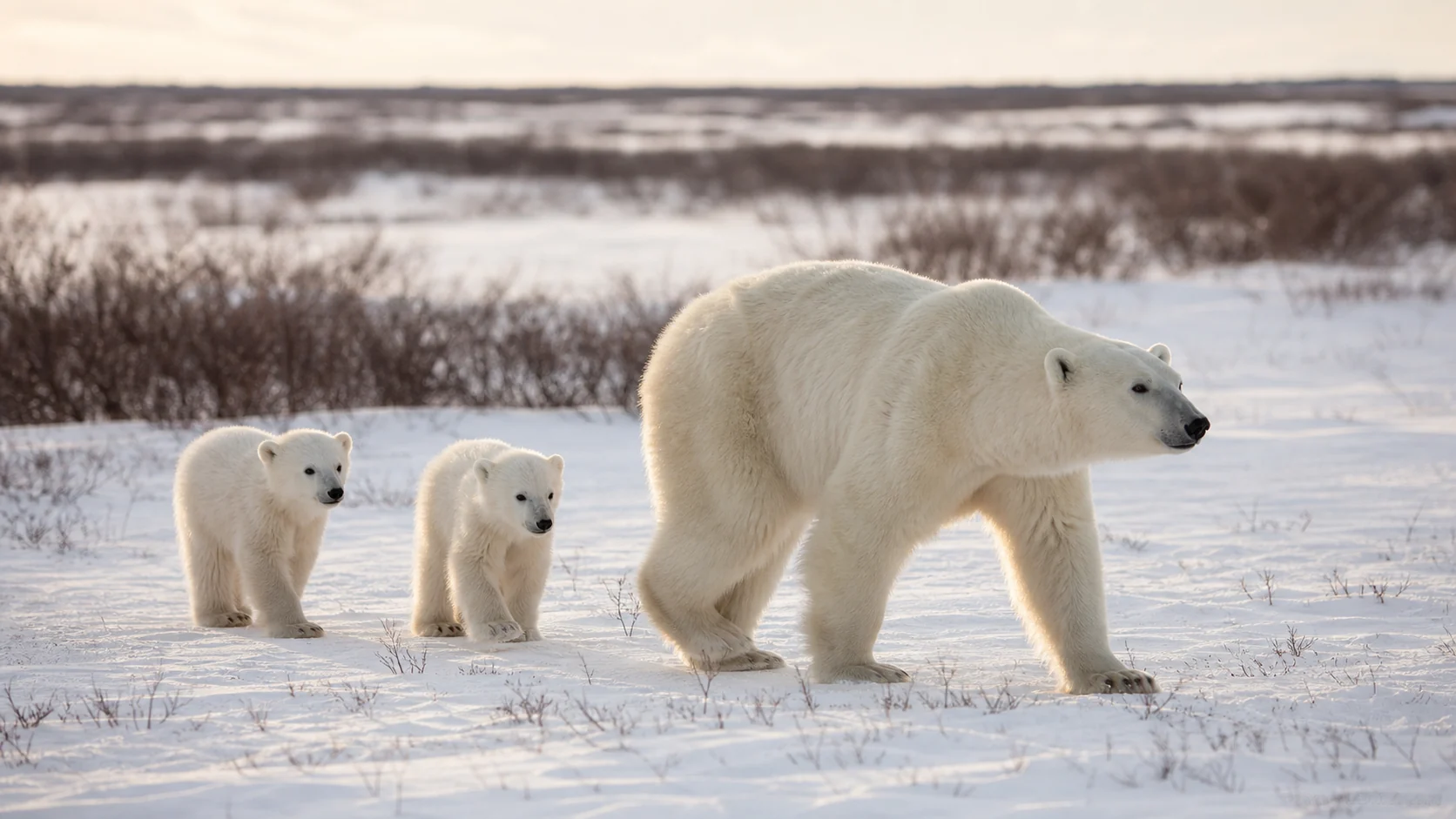
Hudson Bay & Wapusk lowlands

Mother & Cubs

A focused late-winter expedition following polar bear family groups as mothers guide cubs from denning country toward the Hudson Bay

View Expedition Details